Michael-Shawn Dugar has got to be one of the better Seahawks journalists out there at the moment. Reminds me of Clare Farnsworth back in the day. This was a sobering but hell of a read this morning. It's bad form to cut and paste an article in its entirety so I will add below a lead-in. This is likely firewalled but The Athletic is definitely worth their subscription price, hell, even for just MSD's articles alone. Something to consider. I will definitely be getting the book.
By Michael-Shawn Dugar
Aug. 12, 2025
The following excerpt from The Franchise: Seattle Seahawks: A Curated History of the Legion of Boom Era by Michael-Shawn Dugar is reprinted with the permission of Triumph Books. It has been lightly edited in spots for context and clarity. You can find more information and order a copy here.

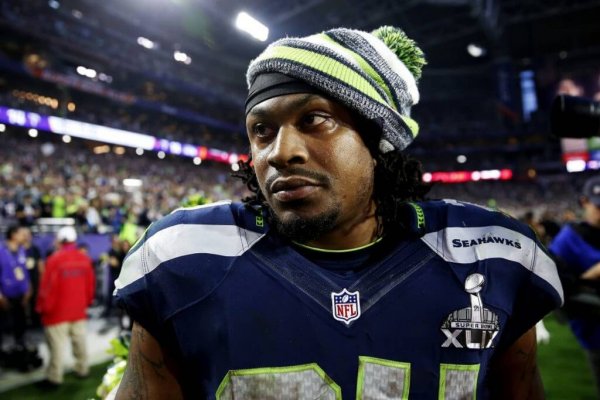
Marshawn Lynch imagined this moment countless times as a kid growing up in North Oakland:
“It’s the end of the game … one more play … the quarterback hand the ball off to Marshawn … he jump in the end zone — touchdown! The Oakland Raiders win the Super Bowl!”
The final seconds of Super Bowl XLIX between the Seattle Seahawks and New England Patriots nearly played out that way.
With Seattle on the New England 5-yard line, trailing 28-24 with 1:06 remaining, NBC’s Cris Collinsworth said, “Now you have to stop Marshawn Lynch.” Then Russell Wilson put the ball in Lynch’s hands.
“Here he goes,” play-by-play man Al Michaels said as the running back plowed forward. “Beast Mode! To the half-yard line!”
Offensive coordinator Darrell Bevell recalled that the Seahawks had failed on a pair of short-yardage runs earlier in the game: Vince Wilfork blew up a third-and-2 shotgun run for no gain in the first quarter, and linebacker Rob Ninkovich did the same on a third-and-1 carry in the third quarter. With those plays in mind, Bevell didn’t think Lynch would just walk into the end zone if he called another run play on second down. Even though Lynch was also successful on a three-yard touchdown run on third-and-2 in the second quarter and produced a first down on a second-and-1 run in the third, Bevell believed he made the right decision based on the situation.
Obviously, Lynch could have scored the game-winning touchdown, but when Bevell hears that he made the worst call of all time, “I would not agree with that” is his retort. As for the specifics of the play he chose, Bevell felt good about giving Wilson options: he could go to Doug Baldwin if the Patriots were in zone coverage, Ricardo Lockette if they were in man-to-man.
“The process was solid,” Bevell said. “And I think the play call gave us a great opportunity to be very successful.”
Choosing to throw on second down may have made sense to the coaching staff, but not to the dreamer from North Oakland.
“Not only did they take a ring, a moment — they took a dream,” Lynch said. “That’s a once-in-a-lifetime situation.”

 www.nytimes.com
A Seahawks Super Bowl disaster and the unraveling of a would-be dynasty: ‘They took a dream’
By Michael-Shawn Dugar
Aug. 12, 2025
The following excerpt from The Franchise: Seattle Seahawks: A Curated History of the Legion of Boom Era by Michael-Shawn Dugar is reprinted with the permission of Triumph Books. It has been lightly edited in spots for context and clarity. You can find more information and order a copy here.
Marshawn Lynch imagined this moment countless times as a kid growing up in North Oakland:
“It’s the end of the game … one more play … the quarterback hand the ball off to Marshawn … he jump in the end zone — touchdown! The Oakland Raiders win the Super Bowl!”
The final seconds of Super Bowl XLIX between the Seattle Seahawks and New England Patriots nearly played out that way.
With Seattle on the New England 5-yard line, trailing 28-24 with 1:06 remaining, NBC’s Cris Collinsworth said, “Now you have to stop Marshawn Lynch.” Then Russell Wilson put the ball in Lynch’s hands.
“Here he goes,” play-by-play man Al Michaels said as the running back plowed forward. “Beast Mode! To the half-yard line!”
Offensive coordinator Darrell Bevell recalled that the Seahawks had failed on a pair of short-yardage runs earlier in the game: Vince Wilfork blew up a third-and-2 shotgun run for no gain in the first quarter, and linebacker Rob Ninkovich did the same on a third-and-1 carry in the third quarter. With those plays in mind, Bevell didn’t think Lynch would just walk into the end zone if he called another run play on second down. Even though Lynch was also successful on a three-yard touchdown run on third-and-2 in the second quarter and produced a first down on a second-and-1 run in the third, Bevell believed he made the right decision based on the situation.
Obviously, Lynch could have scored the game-winning touchdown, but when Bevell hears that he made the worst call of all time, “I would not agree with that” is his retort. As for the specifics of the play he chose, Bevell felt good about giving Wilson options: he could go to Doug Baldwin if the Patriots were in zone coverage, Ricardo Lockette if they were in man-to-man.
“The process was solid,” Bevell said. “And I think the play call gave us a great opportunity to be very successful.”
Choosing to throw on second down may have made sense to the coaching staff, but not to the dreamer from North Oakland.
“Not only did they take a ring, a moment — they took a dream,” Lynch said. “That’s a once-in-a-lifetime situation.”
A Seahawks Super Bowl disaster and the unraveling of a would-be dynasty: ‘They took a dream’
We revisit Super Bowl XLIX and its fallout in an excerpt from The Franchise: Seattle Seahawks: A Curated History of the Legion of Boom Era.
www.nytimes.com